Monday, 26 August 2013

Faces and Proportion

Over the last few weeks we have been looking at the human face in terms of fractions and getting the features of the face in the correct proportion. Students worked hard on this challenge. Here are a few snapshots (cropped).


Friday, 16 August 2013

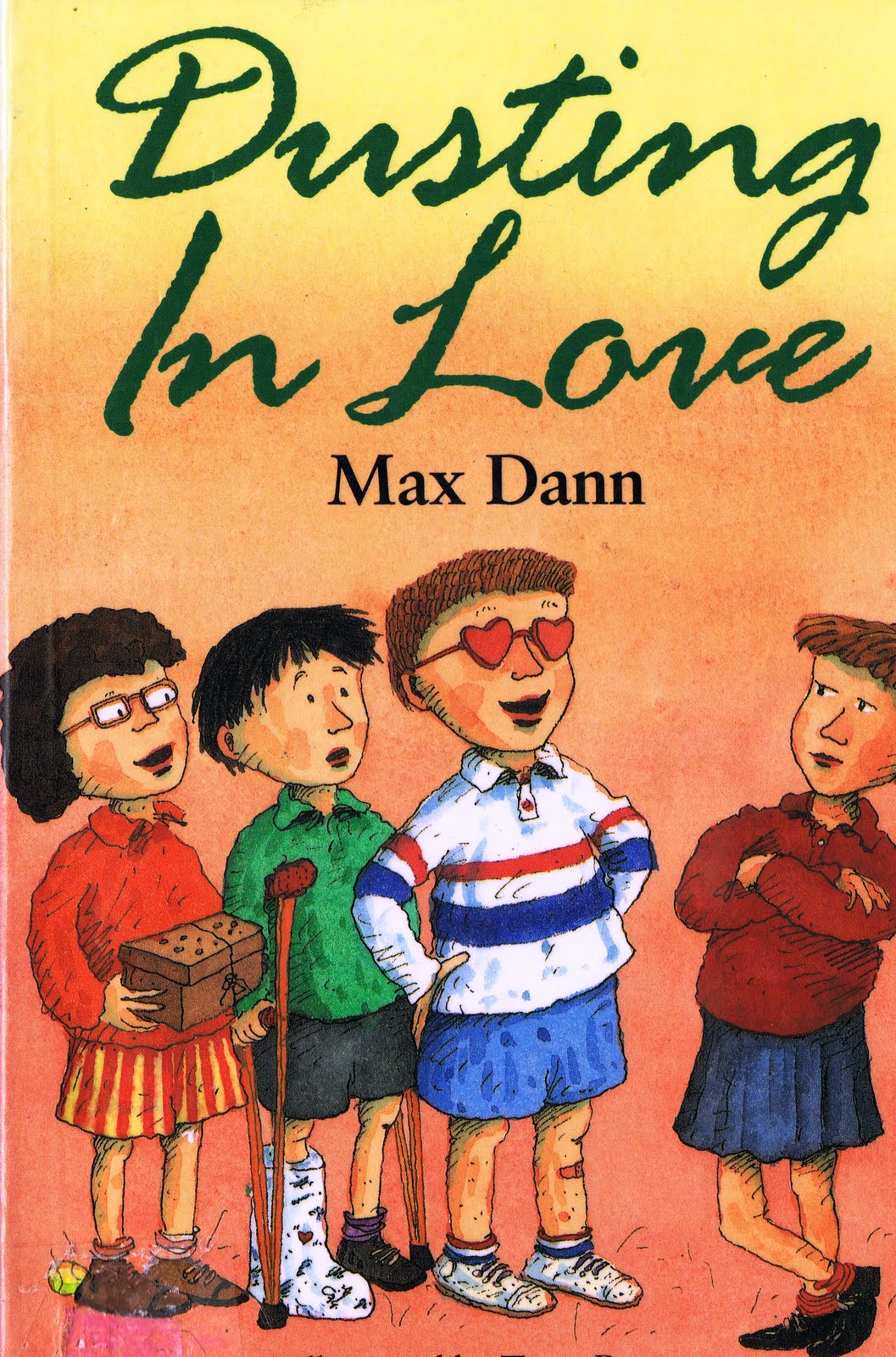
Dusting in Love by Max Dann. Working on characters


We have just finished reading the above pictured humorous class novel by Max Dann and have been working hard on adjectives in readiness to do some in depth character studies. Students will be working in pairs or groups of three, depending on whether they have a major or minor character in the novel. Many students already have composed lists of words relating to the characters. We will be focusing on Thesaurus, Dusting, Gilbert, Grotty, Max, Phoebe, Millicent, and Mr Lord. Today students were exposed to about forty adjectives and had to draft up a sentence for each one, trying to use compound sentences. They then chose what they believed to be their best fifteen sentences to publish. Here are a few examples which were completed with no teacher corrections:


Students are now working in groups of three or four  on the following activities. The Plasticine figurines will be used later in the animations unit which will focus on two of Max Dann's books, Dusting in Love and Going Bananas. These books offer rich opportunities for students to study character development. There is a display up the front of the room for students to refer to.


Each group must produce:

An in depth character study, making reference to specific actions, statements and deeds in the novel to support their statements about the character.

A large wanted picture of their character stating what they are wanted for.

A cartoon strip or story board showing one scene or aspect of the story line

A Plasticine figurine, no taller than 10 cm. A design must be handed in before the group receives the materials.


Monday, 1 July 2013

The Rabbits: Written by John Marsden and illustrated by Shaun Tan (1998)


“The Rabbits came... many grandparents ago...”

If any readers remember the 2000 Olympic Games in Sydney, an excerpt of this story was read in the opening ceremony.

The Rabbits is an illustrated book detailing the arrival of the first fleets and early colonisation of Australia. Marsden explains the events through the eyes of Possum-like creatures which he uses to portray the Australian Aboriginal people. Marsden tells the story through their eyes,  speaking of their fears, their attempts at peace, and in general the “unknown” that comes with these strange, arriving Rabbits, whom play the part of the European Settlers.

 The story is written in an omniscient style, the main voice is not unlike an elder retailing the events to a new generation, or even the stolen generation that is seen in parts of this tale. This voice knows all of what happened to his/her people in more depth than what may be pieced together from an individual's perspective. It is like a story stitched together throughout time or part of the oral history of people passed.

The language is simple and powerful, using short sentences that are appropriate for early childhood readers through to those more independent. I have, however, had comments from the more independent readers of the class that its simplicity is more suited to those of a younger age group.

In drastic contrast, the artwork in this book is stunning and incredibly detailed. Tan uses mixed media and a steam-punk style that captures industrialization and be it “urbanisation” of the Australian wilderness. Tan's machines and overall style for the Rabbits is cold and inhuman, they are distorted, yet, almost make sense, as if someone has painted them based on centuries of the original story being passed through oral history.


The Rabbits: A study of picture planes, and also, a study into the perspective of characters.

Firstly students were asked to think about “being” a Rabbit, or a Possum, and to translate from the text what they might think, feel, say, or do. This was simply a paragraph exercise to accompany their next task.


As an undergraduate teacher (Oh, hi, yes, I forgot to mention, I'm Miss Harbottle) and in a general artsy-fartsy type, my request was build an inspired piece of art using three picture planes: Background, midground, and foreground. The students used a sheet of paper for each plane, the artwork was then layered together and scaled down on a colour photocopy to create a page for their ‘Horrible Histories’.

 Generalising on a scene, the objects in the back (be it mountains, roads, trees, homes, elephants) will always appear higher in the picture plain, and more faded/use a more muted colour palette.

The arc of the sky (or be it the top of your page) will always be the darkest colour. Think about it as if the world is flat and you have a bowl placed over you: You are indeed closer to the part of the bowl directly above your head then you are to the part of the bowl that is in the horizon.

In creating a dream time effect for the pieces of art, I focused on three shades.

The arc - darkest blue,

The next colour down - middle-of-the-range blue,

Tops of the mountains- lightest blue.


Starting at the mountains the opposite happens:

Tops of the mountains- lightest brown, or green,

Middle of the mountains - middle-of-the-range brown/green,

Where the mountain meets the grass or sea - darkest brown,
Lastly illustrating water works on the basis that it reflects what’s going on.

Stating quite generally, the students found the theory of this unchallenging, but some struggled to translate this to paper. I am, however, very impressed with their efforts and stayed tuned for our art.


Sunday, 30 June 2013

Conditions on the First Fleet, and how convicts really copped it...

but by standards of the day, some of these sailings were pure miracles. It is easy to judge history with the privilege of hindsight. And indeed, how we will be seen in two hundred years' time? We discussed this idea in class the other day. The mind boggles. Together we read a chapter about conditions on board the transportation ships during the early colonization of Australia. Students were asked to cross-reference this with another source and then using only fifteen words or phrases, sum up the voyage from the point of view of a convict. They could also add illustrations. This will be another entry in their "Horrible Histories" books. Here are some wonderful depictions:


Wednesday, 26 June 2013

3D Shapes Boards

Students hard at work
3D Shapes Boards on display in the classroom
The students have been working on planar and 3D shapes. Most students have finished or are very close to finishing their 3D shapes Boards. About seven students will be sharing theirs in assembly tomorrow and two boys will be introducing them. Students have been looking at the characteristics of shapes, most notably, faces, edges and vertices and most can capably apply Euler's Law to check the accuracy of their labels. Students had to design and construct their own nets for the cube and a pyramid, and also converted a toilet rolls into a closed cylinders and spray painted them. I also have some very challenging nets for them to construct and a handful of students are taking up the challenge. Students have certainly improved with their fine motor skills, their scoring, folding, gluing and of course following written instructions. They will be tested on their knowledge of shapes this Friday morning. Most of the students did a pretest today to check out where they are with their knowledge on the theoretical side of things. They also did some cross-sectioning of Plasticine shapes so that they understand this concept. Cross-country students will be given the pretest booklet tomorrow.

Kuni looks down from a sea of shapes

Thursday, 13 June 2013

Oonah: a Tasmanian Aboriginal Story


Students are currently engaged with writing retellings of a well-known Tasmanian Aboriginal story called Oonah. Students have been receiving extra assistance from a colleague teacher and as a result have produced some very stunning artwork. The retelling combined with their illustration will make up another chapter in the Horrible Histories books.


Example of work done, a retelling


Another fine example of a retelling


What a great read!